Usually, walls and fences inside Palestine are constructed in order to protect Israelis from Palestinians. But Suraiya, an old woman living alone in a house next to a settlement in the outskirts of Hebron would be relieved, if the fence bordering the settlement could effectively protect her. Young settler kids, approximately between 8 and 14 years old, destroyed parts of the fence on Tuesday afternoon, threw stones on the house destroying most of the windows. The next morning Israeli police told us that army would come to protect Suraiya and her house, but they only stopped at a sight about 200 m behind the fence and the kids (which continued their 'operations' all the time) and didn't intervene until sunset.
We stayed two nights at the house. The old woman was so scared that she didn't dare to sleep and spent all the night praying.
Donnerstag, 30. Oktober 2008

Montag, 27. Oktober 2008
Occupation of a resident's house in Husan

In the night from friday to saturday at around 3 a.m. israeli soldiers occupied a house home to two families with 15 people and expelled the residents. I arrived in the following afternoon, 4 other ISMers were already there. When being asked about the reason, the soldiers told us that youths would frequently throw stones targeting the nearby road that leads to the settlement of Bitar Elit. The house is located on the main road of Husan, a village of 5000 souls near Bethlehem, and the soldiers closed the part of the road next to the house, which caused a detour of about 1km for cars as well as for pedestrians.
On Sunday morning something unexpected happened: A jew from Bitar Eilat settlement arrived and expressed his disagree with the army's actions. He also confirmed that there had never been an incident of stones thrown on the close-by road which he uses every day. It was not clear if it was because of the settler's complaint, but a few minutes later the army opened the road. Then at noon reporters from "al arabiya" and another arbic TV channel arrived and started filming and the soldiers closed the road again. Soon children arrived, on their way home from school. When they understandably started to raise their voices, the locals immediately calmed them down to avoid any violent reaction from the army, though the kids seemed a bit angry, but not aggressive. Finally, after about one hour they opened the road again.
At night, the director of the Khalil branch of the ministry of interior of Palestine, who is a resident of Husan, arrived and told us that he negotiated with the responsible army commander under mediation of the red cross, and was promised that the soldiers would leave still at this night, which eventually happened at 3.40 a.m.
Even if I try to put myself in the position of a hardcore zionist, I could not see a reason for the occupation of the house. Probably they wanted to find out about the attendance of the residents to take violent measures against the occupation, which turned out to be 0. Or they just wanted to show them who has the power and can ignore laws - palestinian, israeli or international ones - without any consequences.
I slept at the formerly occupied house and in the afternoon I took a walk in the beautiful surrounding of Husan. Together with one youth from the house I crossed a valley of stone terraces of vegetable fields and olive groves with a lot of springs emerging from caves in the slopes. Then we crossed a coniferous forest on top of the hill which marked the israeli border. I was a bit worried, rather about my companion than me. We took a rest at a recreation area where strollers passed by and boys made barbaque. Then on the way back a police car stopped us, but after I showed them my passport we could continue to cross the border again, illegally. He told me that he used to walk this path every night at around 4 a.m. on the way to his work in Jerusalem. Almost every Husani works or used to work in Israel or in one of the settlements and they have comparatively normal relations with some of the settlers.
Susya
After another olive picking day around Nablus I moved to Susiya in the very south of the West Bank. After the nakba the residents used to live in a cave, but later they were also expelled from there because the Israeli government declared it a national park. Now they live in simple tents of pitted plastic covers nearby. They are not allowed to build real houses, so one of the homes, which has concrete walls, is also covered with plastic because they're afraid that the army would destroy it.
The people are mainly raising sheeps, but their movement is very limited because most of their pasture is declared closed military zone. For the same reason, water supply from the surrounding wells is also hard. They used to live without electricity untill a group of israeli individuals installed solar cells. The settlement of Susiya is located about half an kilometer away, and soldiers in between are round the clock on watch.
On the day of my arrival, while I couldn't fall asleep at night, I got the stupid idea to take a walk on the road next to the tents and was stopped imediately by a passing by israeli military jeep. They took me to the next checkpoint on the border with Israel but released me after about 20 minutes, together with 4 palestinians who were captured 2 hours before me while crossing the border on foot ilegally after returning from work in Israel. The palestinians were picked up from a friend and wanted me to take to Susiya but in the night I had no idea how to go there and didn't want to wake up the people there, so they suggested to take me to the next (palestinian) police station in Yatta, so that the police should bring me home. I agreed, but I should have known, that the palestinian police is not allowed to enter the area of the tents (under administration of israeli military). So they decided to take me to the police headquarter in Khalil (Hebron), where I spent the night. It reminded me of police experiences in other arab countries: very friendly but slow and bureaucratic. The next day I was picked up by one villager, who brought my passport. I was uncomfortable for causing troubles on my first day.
During the five days I stayed, there wasn't really much to do. Soldiers occasionally shouted "bad words" at us, obviously bored and hoping for some "action", but the villagers stayed calm.
On thursday during the first rain since long time plenty of water entered some of the tents but the farmers were just happy that the sparse soil will soon serve more than just the remaining grass roots.
Finally on saturday I was called to go to Husan, where a house was occupied by the army.
The people are mainly raising sheeps, but their movement is very limited because most of their pasture is declared closed military zone. For the same reason, water supply from the surrounding wells is also hard. They used to live without electricity untill a group of israeli individuals installed solar cells. The settlement of Susiya is located about half an kilometer away, and soldiers in between are round the clock on watch.
On the day of my arrival, while I couldn't fall asleep at night, I got the stupid idea to take a walk on the road next to the tents and was stopped imediately by a passing by israeli military jeep. They took me to the next checkpoint on the border with Israel but released me after about 20 minutes, together with 4 palestinians who were captured 2 hours before me while crossing the border on foot ilegally after returning from work in Israel. The palestinians were picked up from a friend and wanted me to take to Susiya but in the night I had no idea how to go there and didn't want to wake up the people there, so they suggested to take me to the next (palestinian) police station in Yatta, so that the police should bring me home. I agreed, but I should have known, that the palestinian police is not allowed to enter the area of the tents (under administration of israeli military). So they decided to take me to the police headquarter in Khalil (Hebron), where I spent the night. It reminded me of police experiences in other arab countries: very friendly but slow and bureaucratic. The next day I was picked up by one villager, who brought my passport. I was uncomfortable for causing troubles on my first day.
During the five days I stayed, there wasn't really much to do. Soldiers occasionally shouted "bad words" at us, obviously bored and hoping for some "action", but the villagers stayed calm.
On thursday during the first rain since long time plenty of water entered some of the tents but the farmers were just happy that the sparse soil will soon serve more than just the remaining grass roots.
Finally on saturday I was called to go to Husan, where a house was occupied by the army.
Donnerstag, 16. Oktober 2008

More than one week has passed by in Nablus, fortunately it was not too exciting for me. Though I was in four different villages, everyday happened about the same.Just picking olives in the soft october sun, getting fed like kings by the local families, exchanging experiences with the other ISMers in the evening before I early felt asleep.
Somehow I've been always been one of the lucky ones, who went to places without any attacks. Two persons injured by stones thrown on them and a destroyed car were the main casualities suffered from settler attacks in the other villages covered by us where I haven't been yet.
Samstag, 11. Oktober 2008
Today, me and another ISMer started again picking in Zawata, but soon we were called to move to Kafr Qalil, next to the Huwara checkpoint. Yesterday, six villagers were injured by a crowd of approx. 30 settlers , using wooden sticks and fists, while they were harvesting very close to the settlement of Brachah (Maan News). The Rabbis for Human Rights - an israeli HR-organisation with whom we are cooperating - were accompanying them untill noon, but then they left (presumeably because of Sabbath) the place and the settlers felt confident to attack them. According to the villagers two soldiers were standing just 50 meters away, but did not interfere untill more soldiers arrived from a military base just 1 km away, what also took them about 20 minutes.
When we were there (and we stayed untill all farmers returned home), we could harvest without any incident, but the area was not as close to the settlement.
When we were there (and we stayed untill all farmers returned home), we could harvest without any incident, but the area was not as close to the settlement.
Freitag, 10. Oktober 2008
Actually the training was not as related to practice as I expected, I never felt really challenged and I still don't feel very well prepared to be up against violence, especially from settlers.
When it was finished, I moved with the next mini-bus to Nablus. At the moment the main activity there is to accompany palestenians harvesting their olives. They often face problems there, either with the army, settlers or both. Many groves are located in areas declared as military closed zones,and near to settlements there's the additional risk of indiscriminate attacks by israeli settlers. As I am new I decided to go to the place with the lowest danger, a village called Zawata. There's no settlement around but the groves are just behind a military road and officially the farmers are not allowed to enter there at all.
After we crossed that road today in the early morning, a jeep with 3 soldiers arrived, but luckily they were quite friendly and allowed us to pass after they recorded the ID-numbers. After that we could pick olives untill sunset without any other incident, and I enjoyed my first day out in the nature.
The more inpredictable situations occur at farmlands near to israeli settlements, especially because the settlers don't make any difference between palestinians and internationals, contrary to soldiers.
When it was finished, I moved with the next mini-bus to Nablus. At the moment the main activity there is to accompany palestenians harvesting their olives. They often face problems there, either with the army, settlers or both. Many groves are located in areas declared as military closed zones,and near to settlements there's the additional risk of indiscriminate attacks by israeli settlers. As I am new I decided to go to the place with the lowest danger, a village called Zawata. There's no settlement around but the groves are just behind a military road and officially the farmers are not allowed to enter there at all.
After we crossed that road today in the early morning, a jeep with 3 soldiers arrived, but luckily they were quite friendly and allowed us to pass after they recorded the ID-numbers. After that we could pick olives untill sunset without any other incident, and I enjoyed my first day out in the nature.
The more inpredictable situations occur at farmlands near to israeli settlements, especially because the settlers don't make any difference between palestinians and internationals, contrary to soldiers.
Dienstag, 7. Oktober 2008
The way to Jerusalem
As the flights to Egypt are very cheap, I first landed in Marsa Alam on the southern coast on the Red Sea and then continued by bus straight to the border with Israel, with only a few breaks. The border crossing was not as difficult as I expected because of my numerous visas of countries with hostile relationship with Israel.
But when I was through I noticed that I arrived at the wrong time - friday afternoon - and as I didn't feel like spending the day on the beach of Eilat I tried to hitch-hike. Soon somebody took me some 20km further north, but then no car stopped untill sunset. Due to the long overnight bus drives I also was quite tired and lay down on the asphalt which resulted in beeing woken up twice by the local ambulance alarmed by worried passer-bies. Finally also police arrive and told me to find a place to sleep in the settlement nearby what I also tried to do , but nobody answered the bell at the gate of the enclosed village so I slept in the desert.
Fortunately I didn't have to wait so long on the next morning untill Eli and Hila, a generous young israeli couple stopped for me. Actually I planned to go straight to Jerusalem but they convinced me to follow them to their home in Tel Aviv. While walking around in the city center I decided that it's not really interesting here and asked the next Habasha about ethiopian restaurants nearby. They were all closed due to sabbath so they invited me for lunch at their home. I had a good time with them, but somehow they had quite an anti-arab attitude.
In the evening Eli drove me to Qdumim, a jewish settlement inside the West Bank. "We are normal people.", the settlers said when Eli told them that I would volunteer for ISM. From there I got a lift with one of his friends to Jerusalem, where I spent the night at the Palm Hostel near the old city.
The next morning I met there with Hisham, who leads the ISM-training.I still had time untill the afternoon, then I would move to a palestinian home in East Jerusalem. So I still walked around in the breathtaking old city and the more modern center along Jaffa road. A marathonman who claimed to run 2:04 showed me the way to the next ethiopian local.
The home where I should stay the next two days was one of 28 households in the same area that is supposed to be evicted. The family lives there since they were expelled from the West Bank in the 50's but somehow jewish settlers found out that their ancestors had bought their ground under ottoman rule 150 years ago and the government seems to believe them. I stayed there with two other activists. It's not much happening there despite a guard looking around about once every hour. Once the jewish neighbour passed by and I greeted her, which angered Layla, one of my fellow activists, who volunteers since almost two years. There would be no reason to be friendly,as they would always provoke the family, she explained. In my opinion it should also be the activist's job to melt the ice, no matter how "evil" the settlers are, but from then I kept quiet. Yet I'm really not sure if I'm partial enough to join the movement. However, I can stop at any time and simply make a backpacking tour as usual which also would be interesting.Tomorrow I'll attend the training in Ramallah for two days and then will decide what to do.
But when I was through I noticed that I arrived at the wrong time - friday afternoon - and as I didn't feel like spending the day on the beach of Eilat I tried to hitch-hike. Soon somebody took me some 20km further north, but then no car stopped untill sunset. Due to the long overnight bus drives I also was quite tired and lay down on the asphalt which resulted in beeing woken up twice by the local ambulance alarmed by worried passer-bies. Finally also police arrive and told me to find a place to sleep in the settlement nearby what I also tried to do , but nobody answered the bell at the gate of the enclosed village so I slept in the desert.
Fortunately I didn't have to wait so long on the next morning untill Eli and Hila, a generous young israeli couple stopped for me. Actually I planned to go straight to Jerusalem but they convinced me to follow them to their home in Tel Aviv. While walking around in the city center I decided that it's not really interesting here and asked the next Habasha about ethiopian restaurants nearby. They were all closed due to sabbath so they invited me for lunch at their home. I had a good time with them, but somehow they had quite an anti-arab attitude.
In the evening Eli drove me to Qdumim, a jewish settlement inside the West Bank. "We are normal people.", the settlers said when Eli told them that I would volunteer for ISM. From there I got a lift with one of his friends to Jerusalem, where I spent the night at the Palm Hostel near the old city.
The next morning I met there with Hisham, who leads the ISM-training.I still had time untill the afternoon, then I would move to a palestinian home in East Jerusalem. So I still walked around in the breathtaking old city and the more modern center along Jaffa road. A marathonman who claimed to run 2:04 showed me the way to the next ethiopian local.
The home where I should stay the next two days was one of 28 households in the same area that is supposed to be evicted. The family lives there since they were expelled from the West Bank in the 50's but somehow jewish settlers found out that their ancestors had bought their ground under ottoman rule 150 years ago and the government seems to believe them. I stayed there with two other activists. It's not much happening there despite a guard looking around about once every hour. Once the jewish neighbour passed by and I greeted her, which angered Layla, one of my fellow activists, who volunteers since almost two years. There would be no reason to be friendly,as they would always provoke the family, she explained. In my opinion it should also be the activist's job to melt the ice, no matter how "evil" the settlers are, but from then I kept quiet. Yet I'm really not sure if I'm partial enough to join the movement. However, I can stop at any time and simply make a backpacking tour as usual which also would be interesting.Tomorrow I'll attend the training in Ramallah for two days and then will decide what to do.
Sonntag, 7. September 2008
Kappadokia, Aladağlar, Istanbul (the end of my journey)
After Kayseri I finally reached the tourist s wonderland of Kappadokia. Very amazing rock formations, but of course one is not alone there. I wondered why I had to wait in queues to enter some rock hewn churches which were rather disappointing considering the entrance fee of 9 euros and why a nearby castle, which I,ve found much more interesting, was not even open for visiting (but somehow I entered there). The whole area is full of churches with hidden entrances, just where there is a little better preserved fresco, somebody is standing in front of the entrance to demand a fee.
From Güreme, the main city there, it was only 2 hours to the mountains of Aladağlar, a ridiculous distance in Turkey. There I made a very beautiful and challenging trek through a breathtaking rock massif. The only people I met on the way were a group of rockclimbers from Iran. From further away I heard the bells of herds of sheep and cows and one night I spent in a left alone tent, so some people are living up there.
Later on the way back I met a taxidriver from Hamburg, who spent his childhood as a nomad in these mountains and told me how much he'd like to return to this life free of stress.
I also thought about to visit the mediterennian coast around Antalya, but the far distances and high costs scared me off. I also have to admit that I'm already a bit tired from travelling. So I took the next bus from Kayseri to Istanbul. Here I'll spend some days with my friends, relax and finally make the last stage home to Austria.
From Güreme, the main city there, it was only 2 hours to the mountains of Aladağlar, a ridiculous distance in Turkey. There I made a very beautiful and challenging trek through a breathtaking rock massif. The only people I met on the way were a group of rockclimbers from Iran. From further away I heard the bells of herds of sheep and cows and one night I spent in a left alone tent, so some people are living up there.
Later on the way back I met a taxidriver from Hamburg, who spent his childhood as a nomad in these mountains and told me how much he'd like to return to this life free of stress.
I also thought about to visit the mediterennian coast around Antalya, but the far distances and high costs scared me off. I also have to admit that I'm already a bit tired from travelling. So I took the next bus from Kayseri to Istanbul. Here I'll spend some days with my friends, relax and finally make the last stage home to Austria.
Montag, 1. September 2008
Syria
If there is anything positive about the war in Georgia, it is that only then I got the idea of coming to Syria. The landscape there is not much interestıng and also it is pretty hot there, so I only stayed in the cities. But they were really worth to see. After two days in Aleppo I went for another two days to Damascus. I could have stayed much longer, but I also want to see Turkey and don´t have much time left.
I met quite a lot of people here, that don´t really fit into islamıc society like gays, metalheads,etc. A very nice farewell was the jazzfestival in the old castle of Damascus with syrian and international groups.
Now in Turkey I was very warm welcomed by a family who picked me up on the border and insisted to invite me to their last meal before ramadan. They called me 'mujahed' because I look like an Afghan, as they said. From their home near the border I had a long bus drive untill now. Last nıght I spent on the bus station in Kayseri and now I wait there for the bus to Güreme (Kappadokia). However, here in Turkey it,s very expensive to travel. In just one day I´ve spent exactly 37 euros only for food and transport,nothing else. I still didn´t see anything here. In Ethiopia such an amount would last one or two weeks.
I met quite a lot of people here, that don´t really fit into islamıc society like gays, metalheads,etc. A very nice farewell was the jazzfestival in the old castle of Damascus with syrian and international groups.
Now in Turkey I was very warm welcomed by a family who picked me up on the border and insisted to invite me to their last meal before ramadan. They called me 'mujahed' because I look like an Afghan, as they said. From their home near the border I had a long bus drive untill now. Last nıght I spent on the bus station in Kayseri and now I wait there for the bus to Güreme (Kappadokia). However, here in Turkey it,s very expensive to travel. In just one day I´ve spent exactly 37 euros only for food and transport,nothing else. I still didn´t see anything here. In Ethiopia such an amount would last one or two weeks.
Montag, 25. August 2008
Armenia
I made two pleasant trips in Armenia, starting from my "base" in Eriwan, at my friend Albert's home (in Armenia old german names like Eduard, Arthur, Rosa, Erik are very common), who I got to know on my first visit to Armenia three years ago. Other travellers might call it "horror trips", at least the first one, but after what I've experienced so far I take it easy.
First I came to Gumry, the second largest city of Armenia. I arrived at evening, walked around and then joined a group to taste the local beer. Unfortunately one of them lured me to a dark site (I always had only good experiences with the Armenians so I trusted him) in order to rob me. Somehow he left me approx. 10 euros. It was already around 3 p.m. and I decided to spend the night at the "dark site". On the next morning I went to the next police station. There was nobody who spoke english, but in russian I was able to explain what had happened to me and that I knew that one of the group is working in a bank. We rushed to the bank and even found that guy, but he denied that he knows the robber. After that they sent me to two other police departments, where I had to tell the whole story again another 5 times. I spent the 4th night in 4 different countries in a police station and was finally released at around 1 p.m. at the next day. I lost a lot of time, (usually I would not care, but I already booked the flight to Aleppo for tomorrow), but at least I could improve my russian.
My next destination was Alaverdi, in the very north of the country, near the georgian border. The city is located in a steep gorge with very green surroundings, the soviet skyscrapers are probably less attractive,they are even to find in small villages, but somehow I like them.I arrived there at evening. On the next morning I visited Sanahin,one of the many monasteries around and came back to the city to receive the money my father sent me by western union. I already went through the whole process (3 counters) but then they refused to give me the money, because I didn't have the original passport with me. With only 2 euros in my pocket, I decided to pay the private room I shared with two tourists from Eriwan by selling my mobile phone (a second-hand I bought in Oman). In the late afternoon on the way to another monastery I met people who felt more sorry for me and invited me for a meal (due to lack of money I didn't eat except some peanuts) and supersweet berrywine. I tried to refuse but they also forced me to accept some 2 euros from them (I think a new vocabulary has to be coined to describe this action).
I finally also visited also the Odzun monastery (not very special) and then began to search for a mountain lake around Tumanian, which Albert recommended me to visit. On the way there it became dark and when a thunderstorm started I was lucky to find a unused pipe next to the road where I could spend the night. On the next day at noon I reached the small lake, surrounded by forest. Only one young fisherman was there, he was the first person I've ever met in Armenia who didn't speak russian, but he amused me with a very strange cover version of "sex bomb" (the voice sounded like rammstein) from his mobile phone.
Then I went back to Eriwan by hitch-hiking and marschrutka. If Albert wouldn't borrow me some money I really wouldn't know what to do, as I receive my passport not untill tomorrow from the Syrian embassy. But so I could start on the next day for another trip from the Noravank monastery. It was a lonely but very beautiful trek, where I didn't meet any people untill I reached a farm of peach and apple trees next to the Arpa river today morning. I took a bath there and then had only a few meters to the highway back to Eriwan.
First I came to Gumry, the second largest city of Armenia. I arrived at evening, walked around and then joined a group to taste the local beer. Unfortunately one of them lured me to a dark site (I always had only good experiences with the Armenians so I trusted him) in order to rob me. Somehow he left me approx. 10 euros. It was already around 3 p.m. and I decided to spend the night at the "dark site". On the next morning I went to the next police station. There was nobody who spoke english, but in russian I was able to explain what had happened to me and that I knew that one of the group is working in a bank. We rushed to the bank and even found that guy, but he denied that he knows the robber. After that they sent me to two other police departments, where I had to tell the whole story again another 5 times. I spent the 4th night in 4 different countries in a police station and was finally released at around 1 p.m. at the next day. I lost a lot of time, (usually I would not care, but I already booked the flight to Aleppo for tomorrow), but at least I could improve my russian.
My next destination was Alaverdi, in the very north of the country, near the georgian border. The city is located in a steep gorge with very green surroundings, the soviet skyscrapers are probably less attractive,they are even to find in small villages, but somehow I like them.I arrived there at evening. On the next morning I visited Sanahin,one of the many monasteries around and came back to the city to receive the money my father sent me by western union. I already went through the whole process (3 counters) but then they refused to give me the money, because I didn't have the original passport with me. With only 2 euros in my pocket, I decided to pay the private room I shared with two tourists from Eriwan by selling my mobile phone (a second-hand I bought in Oman). In the late afternoon on the way to another monastery I met people who felt more sorry for me and invited me for a meal (due to lack of money I didn't eat except some peanuts) and supersweet berrywine. I tried to refuse but they also forced me to accept some 2 euros from them (I think a new vocabulary has to be coined to describe this action).
I finally also visited also the Odzun monastery (not very special) and then began to search for a mountain lake around Tumanian, which Albert recommended me to visit. On the way there it became dark and when a thunderstorm started I was lucky to find a unused pipe next to the road where I could spend the night. On the next day at noon I reached the small lake, surrounded by forest. Only one young fisherman was there, he was the first person I've ever met in Armenia who didn't speak russian, but he amused me with a very strange cover version of "sex bomb" (the voice sounded like rammstein) from his mobile phone.
Then I went back to Eriwan by hitch-hiking and marschrutka. If Albert wouldn't borrow me some money I really wouldn't know what to do, as I receive my passport not untill tomorrow from the Syrian embassy. But so I could start on the next day for another trip from the Noravank monastery. It was a lonely but very beautiful trek, where I didn't meet any people untill I reached a farm of peach and apple trees next to the Arpa river today morning. I took a bath there and then had only a few meters to the highway back to Eriwan.
Dienstag, 19. August 2008
Kurdestan, Azerbaijan (iranian part), Armenia
My last week in Iran was not much exciting, neither in a positive nor a negative way. I just drove from one "tourist place" to the next one. In Kurdistan these were mainly caves, more and less interesting ones. In one of them I could find a lift for my santoor from Esfahan direct to Vienna by car, what are the odds! The most beautiful cave was in Sahoulan , a grotto that was only accessible by boat, with very interesting rock formations.
Also in Kurdestan I stayed at the Zaribar lake, a Steppensee - I don't know how to translate it into english, it's a lake sorrounded by a belt of reed, with muddy water that has a natural smell not everybody likes, but reminded me of the lake on which I grew up, the Neusiedler See 50 km south of Vienna.
All in all I did not get enough in touch with the Kurds, to notice a specific caracter or customs or something like that, except that some like to watch south korean soap operas translated into kurdish.
The last big city I visited was Tabriz, the capital of the iranian part of Azerbaijan. It did not really enthuse me. I was not sure where to continue from there, I still wanted to go to the Caucasus to practice some russian and after it turned out that the azeri visa would take one week and cost 60 euro I decided to go to Armenia, that I already visited 3 years ago. I'd be also interested to visit Georgia but somehow the russian army was faster than me, and it seems like they want to stay longer than I hoped they would do.
On the way to Armenia , between Tabriz and Ahar I saw the most breathtaking landscape in Iran: soft shaped hills like I already saw them in Kyrgyztan, but not in purple and orange colours, wow! Maybe one day I will resolve my camera-trauma and return there to shoot some awesome photos. But somehow it's quite agreeable to travel and to know that nothing valueable can be lost anymore.
The border valley between Iran and Azerbaijan and Armenia was also nice to drive through. The border crossing itself took me some six hours. The iranian police, unlike I expected, was never suspicious during the month I stayed here, but then on the armenian border post there were two counters: one for visa application and passport control and the other one also for passport control, but: the wall decorated with a russian flag! obviously the young FSB - official did not like the numerous visas of arabic countries in my passport, and I had to give a long interview. But some time after I answered all his worrying questions ("are you al qaida?"), I could finally pass. On the international airport in Erivan there was not such a counter.
As the situation in Georgia is still unclear and there are no border crossings with Azerbaijan (Karabakh-conflict) and Turkey (no bilateral relations because of the genocide that the Turks still deny) I have no other (save) option than to leave Armenia by air. So I quickly (2 days for some 400km are very fast for me) went to Erivan to check a flight ticket, only with a detour to the "devils bridge", a cave formed by the Vorotan river, awesome place, I stayed there overnight.
To Turkey I've found only direct flights to Istanbul so I decided to pay a ticket to Aleppo, just on the border with Turkey, next Tuesday.
`
Also in Kurdestan I stayed at the Zaribar lake, a Steppensee - I don't know how to translate it into english, it's a lake sorrounded by a belt of reed, with muddy water that has a natural smell not everybody likes, but reminded me of the lake on which I grew up, the Neusiedler See 50 km south of Vienna.
All in all I did not get enough in touch with the Kurds, to notice a specific caracter or customs or something like that, except that some like to watch south korean soap operas translated into kurdish.
The last big city I visited was Tabriz, the capital of the iranian part of Azerbaijan. It did not really enthuse me. I was not sure where to continue from there, I still wanted to go to the Caucasus to practice some russian and after it turned out that the azeri visa would take one week and cost 60 euro I decided to go to Armenia, that I already visited 3 years ago. I'd be also interested to visit Georgia but somehow the russian army was faster than me, and it seems like they want to stay longer than I hoped they would do.
On the way to Armenia , between Tabriz and Ahar I saw the most breathtaking landscape in Iran: soft shaped hills like I already saw them in Kyrgyztan, but not in purple and orange colours, wow! Maybe one day I will resolve my camera-trauma and return there to shoot some awesome photos. But somehow it's quite agreeable to travel and to know that nothing valueable can be lost anymore.
The border valley between Iran and Azerbaijan and Armenia was also nice to drive through. The border crossing itself took me some six hours. The iranian police, unlike I expected, was never suspicious during the month I stayed here, but then on the armenian border post there were two counters: one for visa application and passport control and the other one also for passport control, but: the wall decorated with a russian flag! obviously the young FSB - official did not like the numerous visas of arabic countries in my passport, and I had to give a long interview. But some time after I answered all his worrying questions ("are you al qaida?"), I could finally pass. On the international airport in Erivan there was not such a counter.
As the situation in Georgia is still unclear and there are no border crossings with Azerbaijan (Karabakh-conflict) and Turkey (no bilateral relations because of the genocide that the Turks still deny) I have no other (save) option than to leave Armenia by air. So I quickly (2 days for some 400km are very fast for me) went to Erivan to check a flight ticket, only with a detour to the "devils bridge", a cave formed by the Vorotan river, awesome place, I stayed there overnight.
To Turkey I've found only direct flights to Istanbul so I decided to pay a ticket to Aleppo, just on the border with Turkey, next Tuesday.
`
Mittwoch, 6. August 2008
SHIRAZ, ESFAHAN AND ZAGROS MOUNTAINS
I visited Shiraz for one day and then the famous temple of Persepolis, which I both didn't find much interesting, but as it was on the way to Esfahan, I "had" to go there. More interesting for me were the iranian phenomenon of picnicing, the "national sport". The parks in the cities are full, at day and at night, they also bring their tents and barbacue. Many don't even try to find a calm place and sit down at the roadside. Usually they come with their family, not to meet other people.
Passing by some more beautiful picnic-spots at the waterfalls of "lost paradise" and Margoon, I came to Yasuj and finally to Esfahan.
In Esfahan I stayed for one week, there were too many things to do. First I met a Austro-Persian friend who brought me my trekking boots from Austria (so far I always walked with sandals). Then I searched for "santoor", a string instrument, and after I bought one, I looked for a save transport for it. My oud got damaged , when I sent it home by post from Sanaa and my viennese friend was "full". Somehow I got to know somebody who will take it to Kiew in September, so I might make a small detour when I return home from Turkey. Next I had to extend my visa,which also lasted more than one day. And of course I "had" to see the amazing mosques, maybe the most beautiful ones in the world. Also the armenian churches are very interesting, they perfectly unite armenian and persian architecture.
There are a lot of parks, very large ones, and their total absence in the countries which I visited before, made them seem much more beautiful. There's also no risk to step into a dog's excrements, like in Vienna.
Then it was time to explore the Zagros mountain range. It's the homeland of the Bakhtiari nomads. They stay here in the summer, then, to escape the snow, they make a 10 - 15 day's trek to Khuzestan, where it's too hot now. They were very friendly and not suspicious at all, when I met them on my way, though most of them have never seen a foreigner before. It's very hard to pass by their black tents made of the wool of their own goats, and to decline their order to enter. There are many cold rivers, but much more refreshing during a hard walk on the slippery paths is their home-made "dour", the iranian energy drink made of yoghurt. They also offered me to smoke opium many times, but I declined, as it hardly would contribute to my energy. In Iran it's very common to smoke it in front of his wife and children or guests like me.
Communication was a bit hard. Within 8 days I met one arabic speaker and no english speaker, so there was no other option than to improve my farsi. The Bakhtiari themselves speak pashto, which I wasn't able to distinguish from farsi.
Villages and roads are very rare in the mountains. The houses are made of stones and a wooden roof covered with mud or leaves. They are built very close to each other and the slopes are very steep, so the roofs of one row of houses are at the same time the way of the row above.
The Bakhtiaris never either asked me for money nor did their children throw stones on me (happened sometimes in Yemen and Ethiopia), but unfortunetly there are many thieves among them. In two attemps I could hinder them from taking my GPS and mobile phone, but in the third attemp, when I was asleep in the aftermath of a wedding (the third day) they were successfull: For the third time within 17 months my camera was stolen, including 2 credit cards. So I think there'll be no more pictures to see untill i come home.
I visited Shiraz for one day and then the famous temple of Persepolis, which I both didn't find much interesting, but as it was on the way to Esfahan, I "had" to go there. More interesting for me were the iranian phenomenon of picnicing, the "national sport". The parks in the cities are full, at day and at night, they also bring their tents and barbacue. Many don't even try to find a calm place and sit down at the roadside. Usually they come with their family, not to meet other people.
Passing by some more beautiful picnic-spots at the waterfalls of "lost paradise" and Margoon, I came to Yasuj and finally to Esfahan.
In Esfahan I stayed for one week, there were too many things to do. First I met a Austro-Persian friend who brought me my trekking boots from Austria (so far I always walked with sandals). Then I searched for "santoor", a string instrument, and after I bought one, I looked for a save transport for it. My oud got damaged , when I sent it home by post from Sanaa and my viennese friend was "full". Somehow I got to know somebody who will take it to Kiew in September, so I might make a small detour when I return home from Turkey. Next I had to extend my visa,which also lasted more than one day. And of course I "had" to see the amazing mosques, maybe the most beautiful ones in the world. Also the armenian churches are very interesting, they perfectly unite armenian and persian architecture.
There are a lot of parks, very large ones, and their total absence in the countries which I visited before, made them seem much more beautiful. There's also no risk to step into a dog's excrements, like in Vienna.
Then it was time to explore the Zagros mountain range. It's the homeland of the Bakhtiari nomads. They stay here in the summer, then, to escape the snow, they make a 10 - 15 day's trek to Khuzestan, where it's too hot now. They were very friendly and not suspicious at all, when I met them on my way, though most of them have never seen a foreigner before. It's very hard to pass by their black tents made of the wool of their own goats, and to decline their order to enter. There are many cold rivers, but much more refreshing during a hard walk on the slippery paths is their home-made "dour", the iranian energy drink made of yoghurt. They also offered me to smoke opium many times, but I declined, as it hardly would contribute to my energy. In Iran it's very common to smoke it in front of his wife and children or guests like me.
Communication was a bit hard. Within 8 days I met one arabic speaker and no english speaker, so there was no other option than to improve my farsi. The Bakhtiari themselves speak pashto, which I wasn't able to distinguish from farsi.
Villages and roads are very rare in the mountains. The houses are made of stones and a wooden roof covered with mud or leaves. They are built very close to each other and the slopes are very steep, so the roofs of one row of houses are at the same time the way of the row above.
The Bakhtiaris never either asked me for money nor did their children throw stones on me (happened sometimes in Yemen and Ethiopia), but unfortunetly there are many thieves among them. In two attemps I could hinder them from taking my GPS and mobile phone, but in the third attemp, when I was asleep in the aftermath of a wedding (the third day) they were successfull: For the third time within 17 months my camera was stolen, including 2 credit cards. So I think there'll be no more pictures to see untill i come home.
Mittwoch, 16. Juli 2008
The time since my last blog was full of negative superlatives: It was the most boring, most frustrating, most expensive and by far hottest (referring to the temperature) time since I started in Sharm el Sheikh. The only positive superlative: The safety.But I feel it's getting better since I came to Iran yesterday.
But first I'll continue where I've stopped writing: I explored the surrounding mountains of Salalah by hitch-hiking and trekking for two days. Like on the border with Yemen I've found large forests of francinsence trees, which dissapear on the northern slopes of the highest ridge, where the "khareef" (rainy season) never reaches and the Rub al Khali begins. The most beautiful spot was Wadi Darbat where I really felt like in central Europe. The Jebeli, the mountain dwellers, speak a language referred to Mahri and Socotri, and the men also wear a mawaz. When I returned to Salalah I became quite ill, probably because the Omanis love to drive in freezing inside-temperatures. A very generous one drove some 120 km back to Salalah, when he saw my slight chances to stop a car.
Most of the over 1000km road from Salalah to Muscat lead through the Rub al Khali, but of course not through the sand dunes, so there's really not much to see. Muscat, namely the district of Matrah, is probably a bit more charming than Salalah, but also much hotter. Also here the most important languages on the street are Hindi and Urdu, but probably this impression deforms the real ratio, as the Hindustanis simply like to gather on the streets, while the Omanis rather hide in their cars behind obscured windows. For example an Omani would never get out of his car to order a snack in a restaurant. They honk shortly and a (indian) waiter hurries out to provide the driver.
The Omanis are very easy to identify by their white or cream jallabias, and the "kumma", their typical caps. I always use these caps as signpost when I search for information, as the Hindustanis usually point to the next Omani (if there is one around or not) or simply shake their head when being attacked with questions.
Next I started a trekking tour to Jebel Akhdar (which means "the green mountain"). For the very first time I was armed with a special trekking guidebook, but I never before spent so much time with searching for the track. The most frustrating moment was when I couldn't find the "staircase" in the descent through a 200m vertical cliff, though my position according to the books sketch was well-defined, and I had to climb up again after 2 or 3 hours of searching. I claim to be quite good in reading maps (I learnt land survey) and in finding paths, but the paths described were in most cases a product of the author's fantasy. Fortunetly, the thorn trees, wild qat bushes (chewing qat in Oman is neither common nor allowed) and junipers contribute to the "green" of the mountain plateau, but don't grow too dense to hinder from walking.
In the mountains the trend is to leave the old villages deserted and to build a new one nearby. There are a few single households in difficult accessible gorges or slopes that are stil not left, because of the rich palm plantations fed by water springs. The area is quite rich of water and one often finds a pool of clear water take a bath. On most afternoons I was also refreshed by a thunderstorm - though it was not the rainy season - and I was lucky not to be in a wadi when the rain started, as there were deadly superflashfloods. But even without rain the temperatures were very moderate at 2000m above sea level. I was told that in last winter there was even snow.
I decided to finish my trip in the "snake gorge" downstream of Bilad Seet, with the strongest river in the mountains, instead of continuing to the top of Oman, Jebel Shams (3009m). From there I found a car to take me to Rustaq, where I sleept in a hotel after six outdoor nights.
My last destination in Oman was the peninsula Musandam, an enclave in the UAE, and the closest point of the arabic peninsula to Iran. I arrived there after a boring stop&go serial with shared taxis along the flat, nondescript coast and a stopover night in Dibba (UAE). I was interested in the fjord-like landscape there, though it's not compareable with Norway and New Zealand. Until Khasab, the regional capital, there's a paved road, but from there, the small coastal villages are only accessible by sea. My plan was to take a boat to Kumzar - which took 30 minutes -and return on foot, which might have taken 3 days or more. But somehow, after I started from Kumzar, I got some really serious breathing problems and was lucky to arrive in the small village of Rurm after 8 hours, though I was supposed to reach it in only two hours. Rurm's only inhabitants were Hindi workers employed on an island with a military station. Later a medical check proved that I'm okay, so it seems like I have to blame the heat and postpone this trek to a winter in the future.
The historical center of Musandam is Kumzar, a village of probably 1000 souls, that fills out a small area of flat land between the sea and mountains, with no space for any further buildings. The Kumzaris speak their own language with arabic, persian, indian and english(!) influences. The influences came because of it's geographic position an the edge of Musandam, where all the ships entering the persian gulf are passing by. The women wear a strange mask that looks like a giant moustache at first sight.
Finally I went to Dubai to apply for my iranian visa and find a transport to Iran. Beside this I feel pretty out of place in the Emirates. The best thing in Dubai is that one can buy original Milka chocolate, which I was missing so much since I have left.
Yesterday the ferry from Dubai took me to Bandar Lengeh in some 6 hours. I speak only a few words farsi, but nonetheless I feel very comfortable here, simply because of the kindness of the people here. Today I continued to Lar, halfway to Shiraz. I stil didn't see much interesting, but let's see what's going to come.
But first I'll continue where I've stopped writing: I explored the surrounding mountains of Salalah by hitch-hiking and trekking for two days. Like on the border with Yemen I've found large forests of francinsence trees, which dissapear on the northern slopes of the highest ridge, where the "khareef" (rainy season) never reaches and the Rub al Khali begins. The most beautiful spot was Wadi Darbat where I really felt like in central Europe. The Jebeli, the mountain dwellers, speak a language referred to Mahri and Socotri, and the men also wear a mawaz. When I returned to Salalah I became quite ill, probably because the Omanis love to drive in freezing inside-temperatures. A very generous one drove some 120 km back to Salalah, when he saw my slight chances to stop a car.
Most of the over 1000km road from Salalah to Muscat lead through the Rub al Khali, but of course not through the sand dunes, so there's really not much to see. Muscat, namely the district of Matrah, is probably a bit more charming than Salalah, but also much hotter. Also here the most important languages on the street are Hindi and Urdu, but probably this impression deforms the real ratio, as the Hindustanis simply like to gather on the streets, while the Omanis rather hide in their cars behind obscured windows. For example an Omani would never get out of his car to order a snack in a restaurant. They honk shortly and a (indian) waiter hurries out to provide the driver.
The Omanis are very easy to identify by their white or cream jallabias, and the "kumma", their typical caps. I always use these caps as signpost when I search for information, as the Hindustanis usually point to the next Omani (if there is one around or not) or simply shake their head when being attacked with questions.
Next I started a trekking tour to Jebel Akhdar (which means "the green mountain"). For the very first time I was armed with a special trekking guidebook, but I never before spent so much time with searching for the track. The most frustrating moment was when I couldn't find the "staircase" in the descent through a 200m vertical cliff, though my position according to the books sketch was well-defined, and I had to climb up again after 2 or 3 hours of searching. I claim to be quite good in reading maps (I learnt land survey) and in finding paths, but the paths described were in most cases a product of the author's fantasy. Fortunetly, the thorn trees, wild qat bushes (chewing qat in Oman is neither common nor allowed) and junipers contribute to the "green" of the mountain plateau, but don't grow too dense to hinder from walking.
In the mountains the trend is to leave the old villages deserted and to build a new one nearby. There are a few single households in difficult accessible gorges or slopes that are stil not left, because of the rich palm plantations fed by water springs. The area is quite rich of water and one often finds a pool of clear water take a bath. On most afternoons I was also refreshed by a thunderstorm - though it was not the rainy season - and I was lucky not to be in a wadi when the rain started, as there were deadly superflashfloods. But even without rain the temperatures were very moderate at 2000m above sea level. I was told that in last winter there was even snow.
I decided to finish my trip in the "snake gorge" downstream of Bilad Seet, with the strongest river in the mountains, instead of continuing to the top of Oman, Jebel Shams (3009m). From there I found a car to take me to Rustaq, where I sleept in a hotel after six outdoor nights.
My last destination in Oman was the peninsula Musandam, an enclave in the UAE, and the closest point of the arabic peninsula to Iran. I arrived there after a boring stop&go serial with shared taxis along the flat, nondescript coast and a stopover night in Dibba (UAE). I was interested in the fjord-like landscape there, though it's not compareable with Norway and New Zealand. Until Khasab, the regional capital, there's a paved road, but from there, the small coastal villages are only accessible by sea. My plan was to take a boat to Kumzar - which took 30 minutes -and return on foot, which might have taken 3 days or more. But somehow, after I started from Kumzar, I got some really serious breathing problems and was lucky to arrive in the small village of Rurm after 8 hours, though I was supposed to reach it in only two hours. Rurm's only inhabitants were Hindi workers employed on an island with a military station. Later a medical check proved that I'm okay, so it seems like I have to blame the heat and postpone this trek to a winter in the future.
The historical center of Musandam is Kumzar, a village of probably 1000 souls, that fills out a small area of flat land between the sea and mountains, with no space for any further buildings. The Kumzaris speak their own language with arabic, persian, indian and english(!) influences. The influences came because of it's geographic position an the edge of Musandam, where all the ships entering the persian gulf are passing by. The women wear a strange mask that looks like a giant moustache at first sight.
Finally I went to Dubai to apply for my iranian visa and find a transport to Iran. Beside this I feel pretty out of place in the Emirates. The best thing in Dubai is that one can buy original Milka chocolate, which I was missing so much since I have left.
Yesterday the ferry from Dubai took me to Bandar Lengeh in some 6 hours. I speak only a few words farsi, but nonetheless I feel very comfortable here, simply because of the kindness of the people here. Today I continued to Lar, halfway to Shiraz. I stil didn't see much interesting, but let's see what's going to come.
Freitag, 20. Juni 2008
From Al Mahra to Salalah (Oman)
 |
| al mahra |
Surprisingly on the border area near the coast between Yemen and Oman a large mountain forest consisting mainly of francinsence trees apeared and convinced me of making a small trekking tour on the yemeni side.
The next day, when I went to the border post nearby, I was surprised again by the silence there, and had to wait 5 hours (!) untill finally a car arrived to take me to the next big town, Salalah.
Salalah is quite a strange city. Most inhabitants have their origin in India and Pakistan, and some of them don't speak arabic at all. The city center consists only of one mainroad and looks very new and modern, neither arabic nor indian. Just behind the main road one can find some old houses in the same style like those in hadramaut, but they are all abandoned and ruinous. The people seem to be very rich, for example public transport is something unknown here, because (almost) everybody has his own car, which makes it quite expensive to move around.
The Dhofar mountains around Salalah are said to become very green during the rainy season, which will start in the next few weeks. Now it's already very foggy up there. In planning my trip, I made the mistake to arrive in every country in the wrong season, when the soil is in it's driest stage.
Montag, 16. Juni 2008
Wadi Hadramaut & Al Mahra
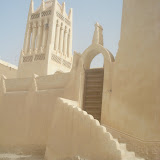 |
| hadramaut |
My way continued to Ghail Ba Wazeer, a town lacking any attractions, but in an area nearby, the soil has the strange habit to collapse and create craters of depths of about 30 meters. In one of those craters there's also a small, clear lake, and due to the lack of hotels I've spent the night there.
Then I continued to Wadi Dowan, an arm of Wadi Hadramaut. The scenery there is always the same: A flat, wide Wadi, cultivated and full of palaces in the remarkable hadrami style, bordered by vertical cliffs that end up in an empty stone desert. I also visited Shibam, maybe the most famous Yemeni city after Sanaa and Aden because of it's ancient skyscrapers, but somehow I liked the cities of Wadi Dowan more. Tarim is the islamic center of Wadi Hadramaut and it attracts a lot of young islamic students from south east asia.
In february this year, 2 tourist were shot dead by infiltrators of the problem-governorate of Shabwa, so the local police was worried about me and provided me with free transport services throughout the region. However, while visiting places I could move freely.
Now, the last region I'm visiting before I enter to Oman is Al Mahra in the far east of the country. Most of it's inhabitants either live in the hardly attractive capital Al Ghaidah or on the coast. Unlike in the north, the mountains are very empty, concerning both vegetation and population. There is the same rocky soil like on Socotra, that creates countless caves, and near to Damqut, some mountain dwellers also live in these caves. They survive there through raising goats, collecting francinsence and hunting birds (couldn't find out, what kind of birds, due to the language barrier).
The Mahris speak a languages related to socotri, and also their faces look like the people from the island.
Now I returned again from a day-trip to Hawf to Ghaidah, in order to be sure not to miss the most important football game for Austria since at least 10 years.
Freitag, 6. Juni 2008
Al Mukalla
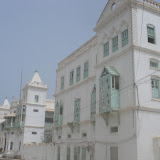 |
| al mukalla |
In the Tihama it was still ok, but since Aden the heat became really unbearable. In order to survive the 7-hours-drive to Al Mukalla I took a modern bus with air conditioning to go there. There was also not much else to see on the way: Very few settlements, mainly sand dunes and black lava desert along the coast. I was also warned about tribal conflicts in that area, so I really didn't have the feeling to miss anything.
Al Mukalla is situated on a small strip between the coast and rocky cliffs. It is the capital of Hadramaut governorate, which is special because of it's historical trading relations with south-east asia, mainly Malaysia, that still hold on. That's also the region where the "mawas" once came from. In the shops, about half of the offered mawases are indonesian products (I've also bought one of them), the rest are yemeni. Also the architecture has some asian influences.
In the daytime the streets here are entirely empty. The sideroads of the old town closer to the rocks are populated by quite a lot of goats, while the people are defeated by the heat into their homes.
Odd monuments are usually a speciality of ex-soviet countries, but here I found one that honored one of my most important companions: the GPS! (even the same model)
Mittwoch, 4. Juni 2008
To Aden along the Tihama
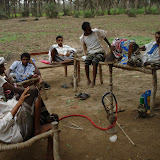 |
| tihama |
The Tihama is the flat coastal strip located between the mountains and the red sea. The landscape changes from small sand dunes to thornbush savannah and cultivated areas with large date palm forests, mango, banana and so on. Though there's rain all year around, the cultivation requires exploitation of ground water deep under the sandy soil.
With a few exceptions, the cities cannot compete with those in the mountains on the architectural level, most consist only of ugly concrete buildings along the main road, without any side road. One of the exceptions is called Zabid. Almost all houses are made of white-painted bricks with beautiful decorations. Little seems to have changed since the city's most prosperous era, when algebra was discovered in it's university, which is only a quranic school today. The narrow dust roads are unsuitable for car driving, the most usual transport is by motorcycle.
On the countryside one can find a lot of variations of buildings, mainly huts, however they look very african. Also the women's wide, colourful dresses are something I'd refer to the black continent. The men's clothes don't differ from the yemenite one's , with the exception that they don't wear a djambia. The absence of kalashnikows is also remarkable.
Most tourists who visit Yemen experience something like a cultural shock, when they see the strict ban of women in the public life. On, the streets, the Tihama is not much different, but yemenis, who are invited to a household in the Tihama might also get such a cultural shock, when they see, that both genders are taking lunch together, chat together and so on.
"But the people here will not kill us?" I suspected her of suicidal intentions, when a 20-year-old "akhdam"-beauty took my hand to take a walk through the old town of Zabid, after she had invited me to her family's home. "In the mountains they would do so," she answered, "but here it's no problem."
Before I made my way to Aden, I still wanted to visit the peninsula of bab el mandeb. It's a military area because of it's important geographic location, but the local police was very friendly and helpful and supported me with a car and two policemen to show me around, in order not to get in trouble with the army there. However, there was no accomodation, and they drove me to the next policestation on the way to Aden, where a less friendly stuff awaited me. I was already sleeping on the roof of the station, when they forced me to enter their car to go to Aden for a 2 hours drive, just to sleep in another fucked up police station. On the next day, they asked me the usual questions and sent me to another station untill i was finally released at 3 p.m. A friend of mine - he's from the village where i was teaching - who stays in Aden only for 1 week also has to survive now a serial of interrogation and got rid of his I.D.-card - just because I wanted to meet him.
However there was also something to laugh about: In one station, 2 policemen brought me to their officer's room and showed him my passport. The officer took a look at my passport, then he asked: "And where is the person?" He obviously recognized me as a Yemeni, due to my imama and the "mawaz", the skirt, most men are wearing in Yemen, Somalia and some parts of Ethiopia.
With a few exceptions, the cities cannot compete with those in the mountains on the architectural level, most consist only of ugly concrete buildings along the main road, without any side road. One of the exceptions is called Zabid. Almost all houses are made of white-painted bricks with beautiful decorations. Little seems to have changed since the city's most prosperous era, when algebra was discovered in it's university, which is only a quranic school today. The narrow dust roads are unsuitable for car driving, the most usual transport is by motorcycle.
On the countryside one can find a lot of variations of buildings, mainly huts, however they look very african. Also the women's wide, colourful dresses are something I'd refer to the black continent. The men's clothes don't differ from the yemenite one's , with the exception that they don't wear a djambia. The absence of kalashnikows is also remarkable.
Most tourists who visit Yemen experience something like a cultural shock, when they see the strict ban of women in the public life. On, the streets, the Tihama is not much different, but yemenis, who are invited to a household in the Tihama might also get such a cultural shock, when they see, that both genders are taking lunch together, chat together and so on.
"But the people here will not kill us?" I suspected her of suicidal intentions, when a 20-year-old "akhdam"-beauty took my hand to take a walk through the old town of Zabid, after she had invited me to her family's home. "In the mountains they would do so," she answered, "but here it's no problem."
Before I made my way to Aden, I still wanted to visit the peninsula of bab el mandeb. It's a military area because of it's important geographic location, but the local police was very friendly and helpful and supported me with a car and two policemen to show me around, in order not to get in trouble with the army there. However, there was no accomodation, and they drove me to the next policestation on the way to Aden, where a less friendly stuff awaited me. I was already sleeping on the roof of the station, when they forced me to enter their car to go to Aden for a 2 hours drive, just to sleep in another fucked up police station. On the next day, they asked me the usual questions and sent me to another station untill i was finally released at 3 p.m. A friend of mine - he's from the village where i was teaching - who stays in Aden only for 1 week also has to survive now a serial of interrogation and got rid of his I.D.-card - just because I wanted to meet him.
However there was also something to laugh about: In one station, 2 policemen brought me to their officer's room and showed him my passport. The officer took a look at my passport, then he asked: "And where is the person?" He obviously recognized me as a Yemeni, due to my imama and the "mawaz", the skirt, most men are wearing in Yemen, Somalia and some parts of Ethiopia.
Sonntag, 25. Mai 2008
2 weeks of everyday life in Sanaa (are enough)

Somehow, after 6 months travelling I felt the need to settle down somewhere for a while. I decided to stay in Sanaa and to attend 4 hours of arabic lessons and 2 hours of oud lessons everyday, something like a (short) comeback to everyday life for me. So i was infamiliar busy and the time flied very fast. Especially the location of the language center was great,in the heart of Sanaa's calm old town.
Usually I prefer to learn musical instruments by myself, but to learn the arabic scales with it's quater intervals, I guess it was necessary to take lessons.
The rain has stopped now and it seems like I can't bear the dry, polluted air here in sanaa. Anyway I frequently caught a cold from it and will flee tomorrow to the hot, but humid coastal areas on the way to the Sultanate of Oman.
Hm, don't know much else to write about, maybe the next days will become more, but hopefully not too exciting.
Sonntag, 11. Mai 2008
Sanaa and the mountains between Manakha and Shahara
My trip to the mountains started with a shock: My camera was stolen somewhere on the way to Manakha, including ALL pictures from my tour since egypt. But as I already took pictures of the area where i planned to trek I didn't return back to Sanaa imediately and continued.
The special thing about the landscape in Yemen is that the buildings on the cliffs and slopes in the mountains complement perfectly with their surroundings and often, from further away it's hard to define where the rock ends and the fundament of the building starts. One can find such fort villages just everywhere, which supports my way of trekking without a planned itinery.
After 3 days I met the next "harami" (criminal): A young man of my age made use of his djambia (the traditional dagger most yemenis wear on their belt) to rob my money, but as i knew his house (i spent the previous night there) i just asked some locals for help to demand my money back from his father, successfully. Later they told me that he will be arrested for 1 year. Seems like a court investigation is not nessecary in Yemen for such a long term. So much about the bad incidents.
Just one day later, in a small village called beit anaheim, i spontaneously decided to start teaching english at the school volunteerly after i found out that they don't have an english teacher there, but my career lasted only 3 days, then police moved into the village to resolve a local land dispute nearby and they wouldn't have accepted me as a teacher there as i have no working visa. Nonetheless it was an interesting experience.The class starts in the morning with a strange, half an hour lasting ceremony, similary to what i've seen in a school in sinai: it's a mix of gymnastics and a military parade without weapons and instruments. At the end the students show the teacher,who leads the ceremony, their clean hands, and if they're dirty they'll be cleaned by hitting them with a stick. Beating up the students with a stick is not considered here as a crime, but as a necessity to push their ambition. Every single person I asked later about this, shared the same mind. Though I totally disagree with this opinion, I have to admit that this circumstances made it much easier for me to teach there, as i have no experience to work with children and lack of any authoritarian character.
So I continued still 2 days to trek north to wadi surdud, a remarkably big and clear stream for yemenite means, and from there up to the main road connecting al mahweet with sanaa, where i took a lift back to sanaa. I bought an oud (arabic guitar) for some 160 euros, attended an ethiopian nightclub to renew my amharic and vibrate my shoulders, and returned near to al makhweet to continue my trek where it ended, after it turned out that the police in beit anaheim would stay longer.
In the mean time the rainy season had started with one month delay, and in the afternoons the wadis were filled with brown,muddy rivers, but fortunately not strong enough to hinder from crossing on foot or by car. Near Hajja I passed by many fresh cadavers of donkeys and goats which were surprised by the floods. In Sanaa the streams on the streets are raising very fast because there aren't any spillways.
In Yemen, even the most isolated village has road access, and many times i didn't mind to jump on one of the occasionally passing by pick-ups, as the speed on the difficult roads is very slow, and it's nice to observe the surroundings with an open air view.
Most people I met on the way called themselve bedu, though they were neither nomadic nor had a significant darker skin than the city people, like in egypt, but at least I've found their legendary hospitality. Some people, the "akhdam", have also some obvious african traces in their faces. In the Tihama, the coastal strip along the red sea there are more of them to find, living in african style huts, but here they assimilated entirely.
In all areas,whenever the dawn was near, the people warned me not to sleep outside as there might be some leopards. I was not sure if i should believe them, but if they really exist, for sure they are very afraid of human beings, as many yemenites carry kalashnikows in addition to their djambia, and wouldn't hesitate to shot them. One guy showed me a tail of a cat of prey hanging from the ceiling of his living room,(looked like from a leopard)which he claimed to have hunted down.
In an area south of shahara, some men asked me if i'd have a metal detector to help them to find old coins from the hameri kingdom (bilquis, the legendary queen of sheba was one of it's reigns), but i had to decline. They said their area is full of them and the rain would erode the soil and might release some tresures. But I tought them that the famous coin of Maria Theresia, which is very popular in Yemen and sometimes still used as a currency, is not from France as most yemenites believe but from my country.
Shahara should become the final destination of my tour, walking further north would lead me to the civil war of Sadaa. Shahara is famous for it's old bridge connecting two vertical cliffs, a must for the photo album of the ordinary tourist. On the pictures I've seen on the internet it looks very impressive but actually it's hardly longer than 10 metres. The village itself is not much worth seen, but the scenery of the mountain top where it's built on all the more. There are two tourist hotels, which frightened me with their high fee of about 12 euros per night which i could drop to 8 euros after routinely bargaining, but the excellent dinner and the breakfast included in the fee alone were worth at least 8 euros, not to mention my first hot shower since I left austria.
The special thing about the landscape in Yemen is that the buildings on the cliffs and slopes in the mountains complement perfectly with their surroundings and often, from further away it's hard to define where the rock ends and the fundament of the building starts. One can find such fort villages just everywhere, which supports my way of trekking without a planned itinery.
After 3 days I met the next "harami" (criminal): A young man of my age made use of his djambia (the traditional dagger most yemenis wear on their belt) to rob my money, but as i knew his house (i spent the previous night there) i just asked some locals for help to demand my money back from his father, successfully. Later they told me that he will be arrested for 1 year. Seems like a court investigation is not nessecary in Yemen for such a long term. So much about the bad incidents.
Just one day later, in a small village called beit anaheim, i spontaneously decided to start teaching english at the school volunteerly after i found out that they don't have an english teacher there, but my career lasted only 3 days, then police moved into the village to resolve a local land dispute nearby and they wouldn't have accepted me as a teacher there as i have no working visa. Nonetheless it was an interesting experience.The class starts in the morning with a strange, half an hour lasting ceremony, similary to what i've seen in a school in sinai: it's a mix of gymnastics and a military parade without weapons and instruments. At the end the students show the teacher,who leads the ceremony, their clean hands, and if they're dirty they'll be cleaned by hitting them with a stick. Beating up the students with a stick is not considered here as a crime, but as a necessity to push their ambition. Every single person I asked later about this, shared the same mind. Though I totally disagree with this opinion, I have to admit that this circumstances made it much easier for me to teach there, as i have no experience to work with children and lack of any authoritarian character.
So I continued still 2 days to trek north to wadi surdud, a remarkably big and clear stream for yemenite means, and from there up to the main road connecting al mahweet with sanaa, where i took a lift back to sanaa. I bought an oud (arabic guitar) for some 160 euros, attended an ethiopian nightclub to renew my amharic and vibrate my shoulders, and returned near to al makhweet to continue my trek where it ended, after it turned out that the police in beit anaheim would stay longer.
In the mean time the rainy season had started with one month delay, and in the afternoons the wadis were filled with brown,muddy rivers, but fortunately not strong enough to hinder from crossing on foot or by car. Near Hajja I passed by many fresh cadavers of donkeys and goats which were surprised by the floods. In Sanaa the streams on the streets are raising very fast because there aren't any spillways.
In Yemen, even the most isolated village has road access, and many times i didn't mind to jump on one of the occasionally passing by pick-ups, as the speed on the difficult roads is very slow, and it's nice to observe the surroundings with an open air view.
Most people I met on the way called themselve bedu, though they were neither nomadic nor had a significant darker skin than the city people, like in egypt, but at least I've found their legendary hospitality. Some people, the "akhdam", have also some obvious african traces in their faces. In the Tihama, the coastal strip along the red sea there are more of them to find, living in african style huts, but here they assimilated entirely.
In all areas,whenever the dawn was near, the people warned me not to sleep outside as there might be some leopards. I was not sure if i should believe them, but if they really exist, for sure they are very afraid of human beings, as many yemenites carry kalashnikows in addition to their djambia, and wouldn't hesitate to shot them. One guy showed me a tail of a cat of prey hanging from the ceiling of his living room,(looked like from a leopard)which he claimed to have hunted down.
In an area south of shahara, some men asked me if i'd have a metal detector to help them to find old coins from the hameri kingdom (bilquis, the legendary queen of sheba was one of it's reigns), but i had to decline. They said their area is full of them and the rain would erode the soil and might release some tresures. But I tought them that the famous coin of Maria Theresia, which is very popular in Yemen and sometimes still used as a currency, is not from France as most yemenites believe but from my country.
Shahara should become the final destination of my tour, walking further north would lead me to the civil war of Sadaa. Shahara is famous for it's old bridge connecting two vertical cliffs, a must for the photo album of the ordinary tourist. On the pictures I've seen on the internet it looks very impressive but actually it's hardly longer than 10 metres. The village itself is not much worth seen, but the scenery of the mountain top where it's built on all the more. There are two tourist hotels, which frightened me with their high fee of about 12 euros per night which i could drop to 8 euros after routinely bargaining, but the excellent dinner and the breakfast included in the fee alone were worth at least 8 euros, not to mention my first hot shower since I left austria.
Donnerstag, 17. April 2008
Socotra

When I returned back to Sanaa yesterday evening, I had the feeling that something was missing on my 2 weeks trip on Socotra, but now I think that after 5 months on the road, path, rail, ship, plane or whatever my feelings became quite blunted and even for unique places like Socotra it's hard to enthuse me.
In fact I had an adventurous trekking tour as usual, starting through the Haggier mountains in the center of the island, that reminded me a bit of the alps, with it's grey limestone and darkgreen bushes, along mountain rivers lined with palm trees and backed up to many natural swimming pools which are hard to pass by without a refreshing bath. After 6 days of flush of water I crossed a dry karst plateau with some dragonblood and francinsence trees and was surprised not to find water in the canyon where I descended next. The canyon surprisingly ended in a stalactite cave, which raised my hope again, but the drops all disappeared in the ground. The next day, after my water was finished and I started to drink my urine I was forced to exploit the water reserves of a temporary left alone home in one of the many caves. Then I soon reached the southern coastal strip, which has not much to offer and I stopped a car to Mahfirin, a fisher village where I had a rest for 1 day and stocked up with food. Then a further 3 days along the cliff line of the eastern part of the island, where I had my first aquintences with tourists outside of Hadibo. The tourist attractions there were a cool spring coming out of a huge, steep, white sand dune and another but more interesting stalactite cave. The majority of these tourists (and in Yemen in general) came from Italy and some Socotris who occasionally work with tourists speak better italian than english. After I returned to Hadibo, the capitol I still had 1 day to go to Galansyia in the far west to relax on the sand beach there.
The people on Socotra mainly depend on their goats, on the coast of course from the fish, but the strong monsoon wind in summer forces them to stay on the land for 3 month every year. Agriculture is very rare, probably worth to mention dats, but francinsence and the red extract of the dragonblood tree (the "dragonblood", which is used as cure and as facial lotion for women) which are sold for 2 euro per about 50 gramm. The Socotris live in very simple stone houses which lack of any decoration, quite similar to those of the Bedu on Sinai, also the wealthier ones. Most have more than one home (up to 5), some also live in caves. Though entirely veiled and always refusing to pose for a picture, the women have a much more confident behaviour than on the yemeni mainland and it's no problem to have a chat with them. I was too lazy to learn some phrases of the local language socotri, as 100% speak arabic fluently. But it was interesting to notice that they call foreigners "farenji" , like in Ethiopia. They also have some common customs with the Somali and Afar like dunking the hand in a porringer before and after consuming food (usually rice, on the coast supplemented with fresh fish) or go great each other by kissing someones hand (if they don't great by touching nose and nose), though most of them have their origin in Mahra in eastern Yemen, which used to be a kingdom including Socotra. There are also some fishermen with obviously pure african faces, but somehow they don't know where their ancestors came from and assimilated to the socotries.
On Socotra I enjoyed 100% freedom of movement, in contrary to the mainland, where I'm supposed to apply for travel permits again. But in contrast to Sudan, the policemen do not notice that I'm a foreigner, when I travel by public transport, and it's no big risk to move off the itinery of my permit, in the case that I want to change my program. In the worst case I'll be sent back to Sanaa. I just have to avoid the areas where kidnappings took place, and I'm sure that I'm well informed about it now.
Abonnieren
Posts (Atom)

